


Wibax’s Electric Truck is a Quiet Trailblazer – “The Impact of Weather Conditions Was the Biggest Surprise”
Last summer, Wibax launched Finland’s first electric, ADR-approved tank truck in cooperation with Scania. The introduction of the electric truck was an essential part of the Wibax goes electric project, which has set ambitious goals for the entire organization. But what does an electric future feel like in practice?
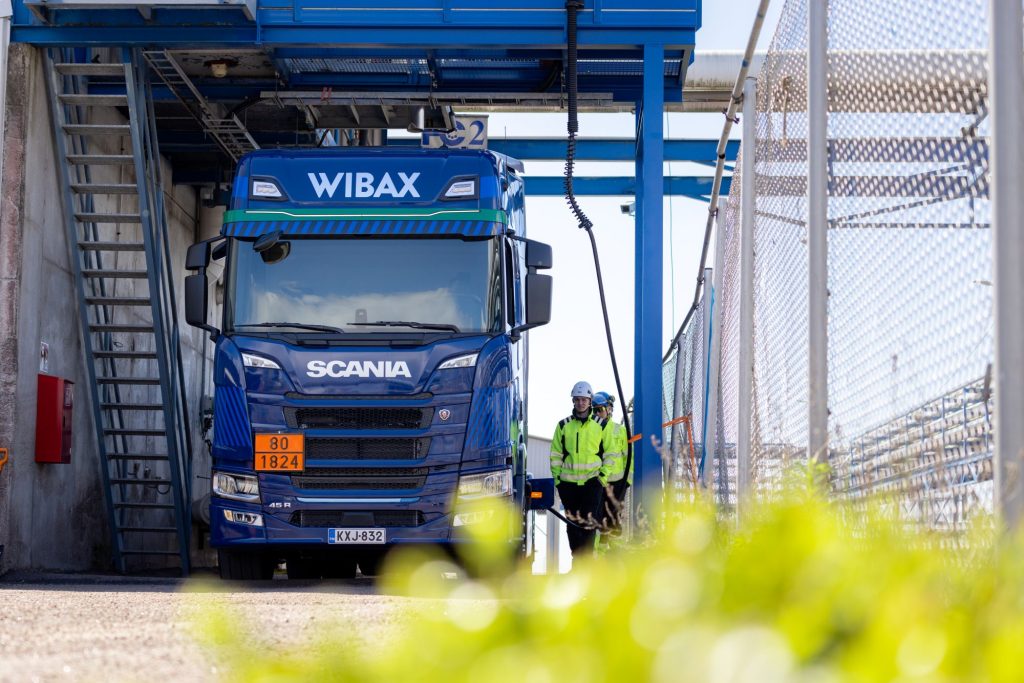
– The ride is comfortably smooth and quiet, so in that sense, the electric truck is perhaps even a bit better than a diesel-powered vehicle. I’ve been really satisfied with the truck. It has been surprisingly pleasant to drive, comments Toni Jaakkola, who has been working as a truck driver since 2012. He transitioned to Wibax in 2025 and has enjoyed his time with the company ever since. Last summer, Jaakkola jumped behind the wheel of an electric truck for the first time:
– I didn’t really have any preconceptions about driving an electric truck, as I had no prior experience with electric vehicles, neither passenger cars nor, of course, large trucks. So, it was nice to get to try an EV without any expectations.
The experience turned out to be a positive one. Jaakkola feels that driving doesn’t differ all that much from driving a diesel truck, except that there is plenty of power available and you have to keep an eye on charging during shifts.
– The driving itself doesn’t really differ much from diesel. The biggest difference is that all the power is instantly available the moment you press the accelerator. You don’t get left behind in traffic as easily anymore, because the acceleration is more efficient, Jaakkola says.
Jaakkola also praises the quiet and smooth ride. The absence of an internal combustion engine completely changes the atmosphere in the truck cabin, as the traditional engine vibration and roar are noticeably absent. Because the motor is nearly silent, you barely hear any engine noise inside the cab.
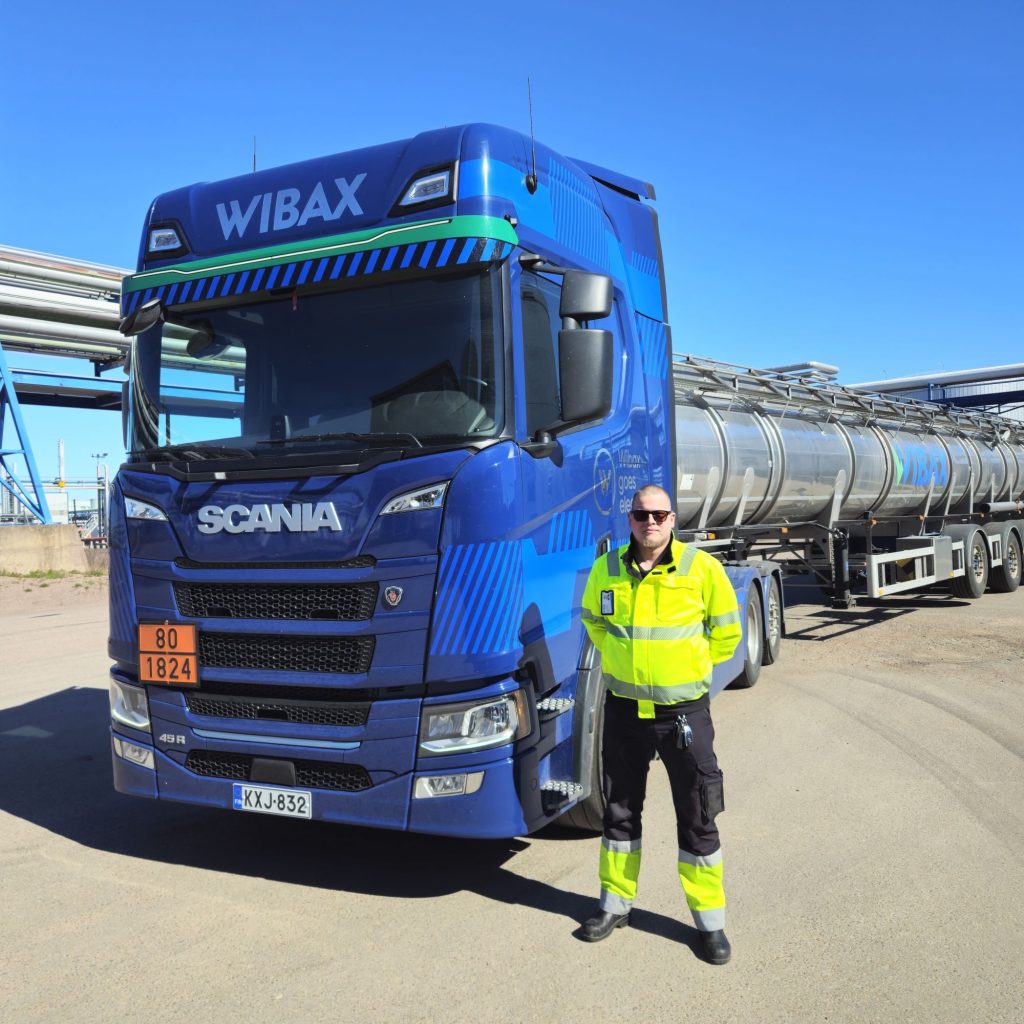
– Some fanatics might say they miss those sounds, of course, but the silence has its benefits. It’s nice to cruise down the highway and take in the scenery a bit at the same time, Jaakkola comments.
Training Emphasizes Efficiency and Learning Charging Routines
Wibax has set the bar high: the goal is for their entire fleet to run 100% fossil-free by 2030. For the company, this is far from just empty talk. It is real, day-to-day work already happening on the ground in Hamina. Stationed at their Hamina terminal, Wibax’s fully electric, ADR-approved tank truck actively delivers liquid chemicals to customers.
Driver training for Wibax’s electric truck doesn’t mean starting everything from scratch, says Aki Eerola, the transport planner and driver supervisor in Hamina.
– Driving an electric truck is actually very similar to a traditional diesel truck. The biggest shift is in the driving style itself. When operating an electric vehicle, smoothness and efficiency become essential. Since a driver’s habits directly impact the battery life, predictive driving is now more critical than ever, Eerola continues.
The actual training is implemented as an intensive crash course, focusing particularly on charging routines and exceptional situations. The training covers using the charger, plugging in the vehicle, and resolving potential issues, such as performing an emergency release on a charger. Although major technical faults often require external assistance, the training equips drivers with the skills to independently solve smaller everyday challenges right on the road.
Typically, drivers’ shifts last 8-10 hours, during which the electric truck covers about 300 kilometers. In these cases, the electric truck requires an intermediate charge at the Lappeenranta charging point, as the truck’s range is approximately 200 kilometers when loaded.
The Harshest Battery Drain Isn’t Severe Frost After All
According to Eerola and Jaakkola, perhaps the most significant and surprising factor related to operating an electric truck is the direct impact of weather conditions on the range. Contrary to popular belief, severe frost alone is not the most critical factor for heavy vehicles, as the battery pack’s advanced thermal management ensures performance even in cold weather. Instead, the biggest surprise has been the massive impact of road conditions: for instance, unplowed roads, slush, and high rolling resistance consume energy and shorten the range much more than sub-zero temperatures themselves.
– It came as a bit of a surprise to me how much weather conditions truly affect the range. If it happens to be a day when the road is unplowed and full of sleet or slush, the electric truck’s range is shortened surprisingly much, Eerola explains.
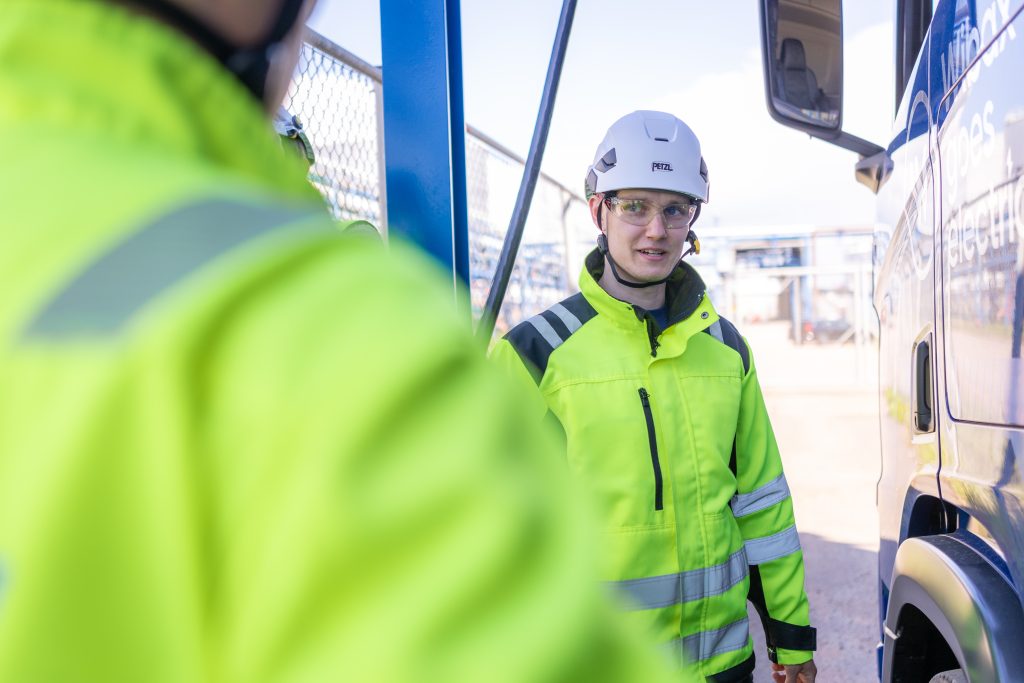
He also notes that this is why frost itself is not necessarily the worst battery drainer, as is commonly thought:
– Many people mistakenly believe that the degree of frost specifically has a massive impact on range. With heavy vehicles, however, we haven’t noticed any significant difference, even if the thermometer reads below minus 20 degrees. The batteries are liquid-cooled and liquid-heated: whenever the truck is plugged into a charger, liquid circulates to preheat the battery pack. So, the vehicle doesn’t cool down easily when setting off. The condition of the road surface affects it much more than just the cold.
Challenges Are Made to Be Solved
Wibax acts as a trailblazer and pioneer in the electrification of heavy transport. While electric vehicles have become more common in lighter distribution transport, Wibax is currently understood to be the only operator in Finland within the tank truck sector to have a fully electric tank truck in daily use. Eerola is pleased with the electric truck, which has now been in use for a year, and states that it is an essential part of Wibax’s electrification goals. He feels it has been great to be involved in doing something that no one else has yet.
Operating electric vehicles always comes with its own challenges. Eerola sees the charging infrastructure and the range of electric trucks as the biggest hurdles, since the electric truck’s range with a full load is around 200 kilometers, whereas a diesel fleet typically manages over 500 kilometers. The situation is described by a classic “chicken or egg” dilemma: a more comprehensive charging network is needed so that more electric trucks can be acquired, but on the other hand, investing in chargers would require a larger number of electric vehicles on the road.
However, Eerola feels that electric trucks are here to stay:
– The future of electric trucks looks promising. There are, of course, some challenges that need to be solved, but I do believe they are the kinds of problems that can be fixed.Jaakkola, who drives the electric truck, also has a clear wish for the future of electric heavy transport:
– If I could wish for one thing for the future, it would be for battery capacity and range to increase. Being able to drive longer distances with electric trucks is really my only wish for the future.